Probably in August. We can argue whether RBI is dovishly neutral or neutrally dovish but the telltale signs of at least one more rate cut are strewn all over the policy statement, points out Tamal Bandyopadhyay.

For protein rich items such as meat and fish, eggs as well as milk and products, the inflation in May slowed compared to last month

The Reserve Bank of India (RBI) on Wednesday announced an extension of interim ways and means advances (WMAs) limit of Rs 51,560 crore to state governments till September, to help them tide over the financial stress posed by the second wave of COVID-19. WMAs are temporary advances given by the RBI to the states to tide over any mismatch in receipts and payments. There are two types of WMA - normal and special. While normal WMA are clean advances, special WMA are secured advances provided against the pledge of the government of India dated securities.

The report said that "we believe, institutions are more important than individuals" and ultimately what is important is the credibility and the independence of any institution and nothing else.

Shifting its stance of monetary policy towards targeting retail inflation as it is an "inequitable tax", RBI today said it may exceed 8 per cent by March end and efforts will continue to bring it down.

Costlier vegetables slowly pushed retail inflation, which had remained well within the Reserve Bank's comfortable level of 4 per cent during most part of 2019, peaked to more than three-year high of 5.54 per cent in November.

Achieving inflation target of 4 per cent, recovery after remonetisation and hardening profile of oil prices are some of the risks which the RBI is watching closely, says Gaurav Kapur.

In his book, former governor Subbarao says Chidambaram, Pranab were piqued by his tight rate policy.

'The Reserve Bank's independence has remained a work in progress, an enduring challenge that the nation has been grappling with on an ongoing basis,' says RBI Deputy Governor Dr Viral Acharya.

SBI was the biggest loser in the Sensex pack, shedding 2.40 per cent, followed by Yes Bank, Bharti Airtel, L&T, Sun Pharma, M&M, ICICI Bank, ONGC, RIL, Asian Paints, Vedanta and HUL, which lost up to 2.37 per cent.

The government plans to bring down its stake to 26 per cent in these two banks, which are yet to be identified. This may not come in the way of getting investors for these banks, provided the government is willing to step back rather than run them the way it had been doing for over five decades since these banks were nationalised, points out Tamal Bandyopadhyay.

In twin blows to Indian economic revival, higher food prices drove retail inflation to a five-month high of 7.4 per cent while factory output fell for the first time in 18 months. The second consecutive month of rise in consumer price index (CPI)-based inflation will add to the pressure on the Reserve Bank of India (RBI) to again raise interest rates to tame high prices. Inflation has been above the targeted zone for the ninth month in a row and as per statute, the RBI will now have to explain to the government in writing why it failed to keep prices below 6 per cent.

Rajan had overturned the majority opinion of the members and chose to hold the rates at the last monetary policy review in October.
The government on Wednesday asked the Reserve Bank to maintain retail inflation at 4 per cent with a margin of 2 per cent on either side for another five-year period ending March 2026. To control the price rise, the government in 2016 gave a mandate to the RBI to keep the retail inflation at 4 per cent with a margin of 2 per cent on either side for a five-year period ending March 31, 2021.
The Fed made clear that the rate hike was a tentative beginning to a "gradual" tightening cycle

There was no word on whether or when Patel would be talking to the media about his priorities and plan of action as head of Mint Street

It is the six per cent target RBI is more concerned about.

Here are the key decisions announced by the Reserve Bank of India on Thursday.

With inflation remaining at elevated levels, central banks around the world, including the Reserve Bank of India (RBI), will kill excess demand in economy over the next six to eight months, sources in the know said. They also indicated that there could be a rate hike in June, when the inflation forecast for the current financial year would be raised. The RBI, the sources said, might announce more steps such as raising the limit on held-to-maturity (HTM) bonds to support government borrowings but might not come out with any further quantitative easing GSAP (Government Securities Acquisition Programme) measures.

He has had a productive first year at the RBI -- one which saw, also, India's economic imbalances improve and the unexpectedly strong general election outcome.

Linking all new floating rate loans to an external benchmark won't impact existing borrowers, so customers who have taken long-term home loans recently should watch things carefully, say Joydeep Ghosh and Sanjay Kumar Singh.

Interview with former Reserve Bank of India governor by Duvvuri Subbarao.

RBI Governor Raghuram Rajan is regarded as credible by global financiers.

This is the first time in the RBI's history that a governor is leaving without willing to renew his contract
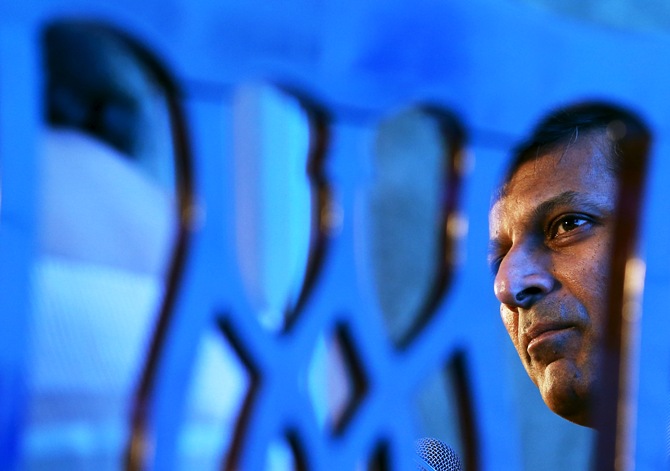
The RBI Governor brought down retail inflation to 3.8% in July.

Backloading the government's borrowing programme suggests the finance ministry's confidence in better revenue numbers, says A K Bhattacharya.

The S&P BSE Sensex shed 119 points to close at 27,977 and the Nifty50 dropped 45 points to finish at 8,591.

The difference between what the banks play in the US and India is not that of soccer and football but rugby and football. SVB also has a unique character. But when risks are mispriced, the fallout could be very similar, points out Tamal Bandyopadhyay.

Rumours in the bureaucracy on his successor include the names of Sajjid Chinoy of JP Morgan, Rathin Roy of the National Institute of Public Finance and Policy, Neelkanth Mishra of Credit Suisse and the principal economic advisor, Sanjeev Sanyal.

Reserve Bank of India Governor Shaktikanta Das tells Anup Roy, Raghu Mohan and Niraj Bhatt that it is time for banks to lower interest rates and start lending to cash-starved finance companies after due credit appraisal and proper risk assessment.

Home Minister Rajnath Singh said that the decision could cost the government roughly Rs 15,000 crore.

Finance minister Nirmala Sitharaman on Wednesday exuded confidence that inflation would further decline and the government is on track to meet its budgetary target for deficit and said that there is no fear of stagflation in India. Replying to the debate on first batch of Supplementary Demands for Grants 2022-23 in Lok Sabha, the finance minister said inflation has come down and it is now in the tolerable band of the RBI. Inflation has been declining since April 2022 and it is declining further, she said.

'Rate cut should reiterate RBI's commitment in providing confidence to consumers and small business.'

It is thanks to the policy of liberalisation conceived by Manmohan Singh and enforced by P V Narasimha that the Indian economy has now become the world's 5th largest economy by nominal GDP, asserts Dr Sudhir Bisht.
SBI is the first major bank to cut its base lending rate this year.

The year 2014-15 could well go as one of long-pending financial sector reforms, expected to have a lasting impact.
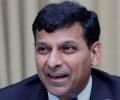
There is also a lobby within the bureaucracy that wants to see Rajan's influence curtailed
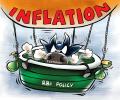
'Election years tend to see high government expenditure on unproductive schemes, though that money sloshing around can boost private consumption.' 'Again, it can mean higher inflation,' explains Devangshu Datta.
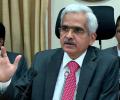
To a specific question on the change in RBI's stance from "neutral" to "accommodative", Das said it means that there will not be any rate hike from here on.

Moody's listed six agenda on the list of pending reforms -- land acquisition Bill, labour law reforms, significant infrastructure investment, tangible benefit from Make in India initiative, tax administration and PSU bank reforms
 © 2026 Rediff.com - Advertise with us - Disclaimer - Privacy Policy - Sitemap - Feedback - About us - Terms of use - Grievances